Serving Tampa Bay & Central Florida

Solar can save many Florida homeowners money, but it isn't the right choice for every home. Learn how solar works, what affects your savings, and how to decide if it's the right investment for you.

Many Florida homeowners have seen changes in their electric bills in recent years.
Several factors contribute to higher costs, including increased energy demand, hotter summers, fuel costs, and utility infrastructure investments.
While homeowners can't control utility rates, they can take steps to improve their home's efficiency and reduce overall energy consumption.
Understanding where your electricity is being used is the first step toward making informed decisions.
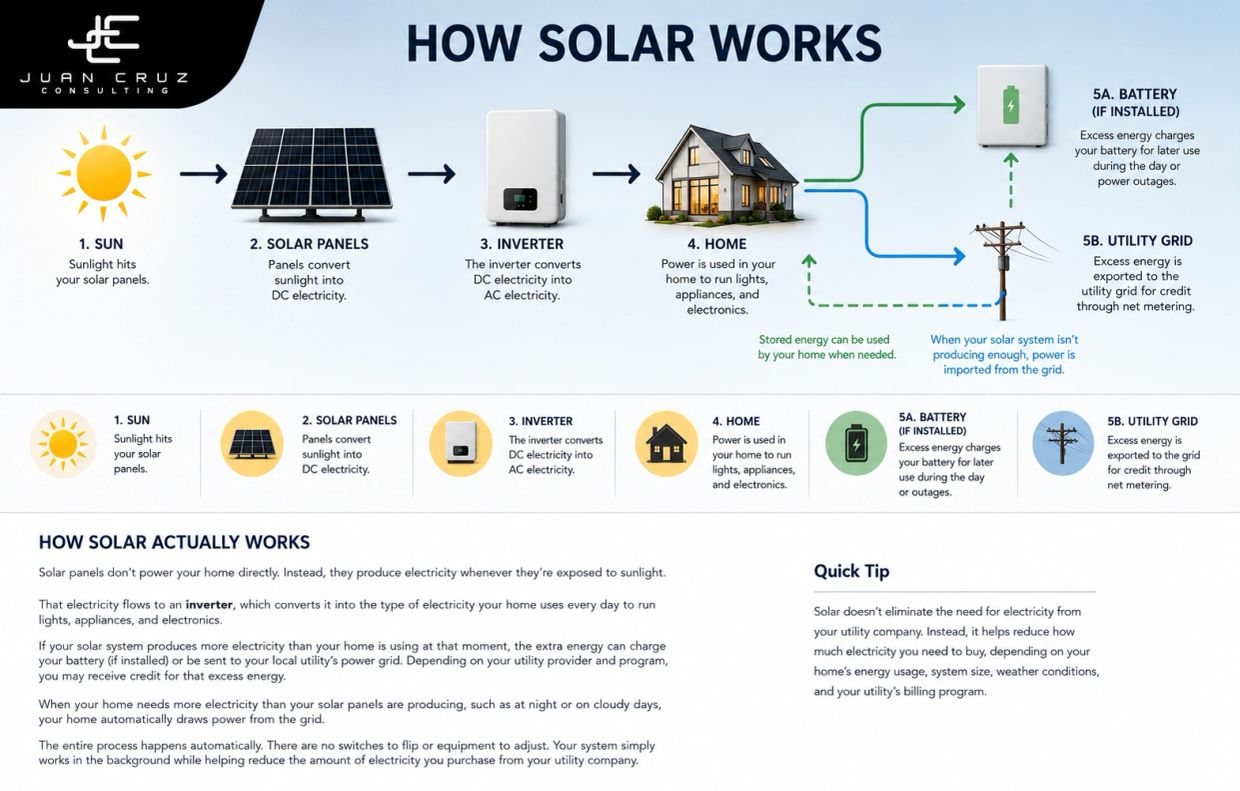

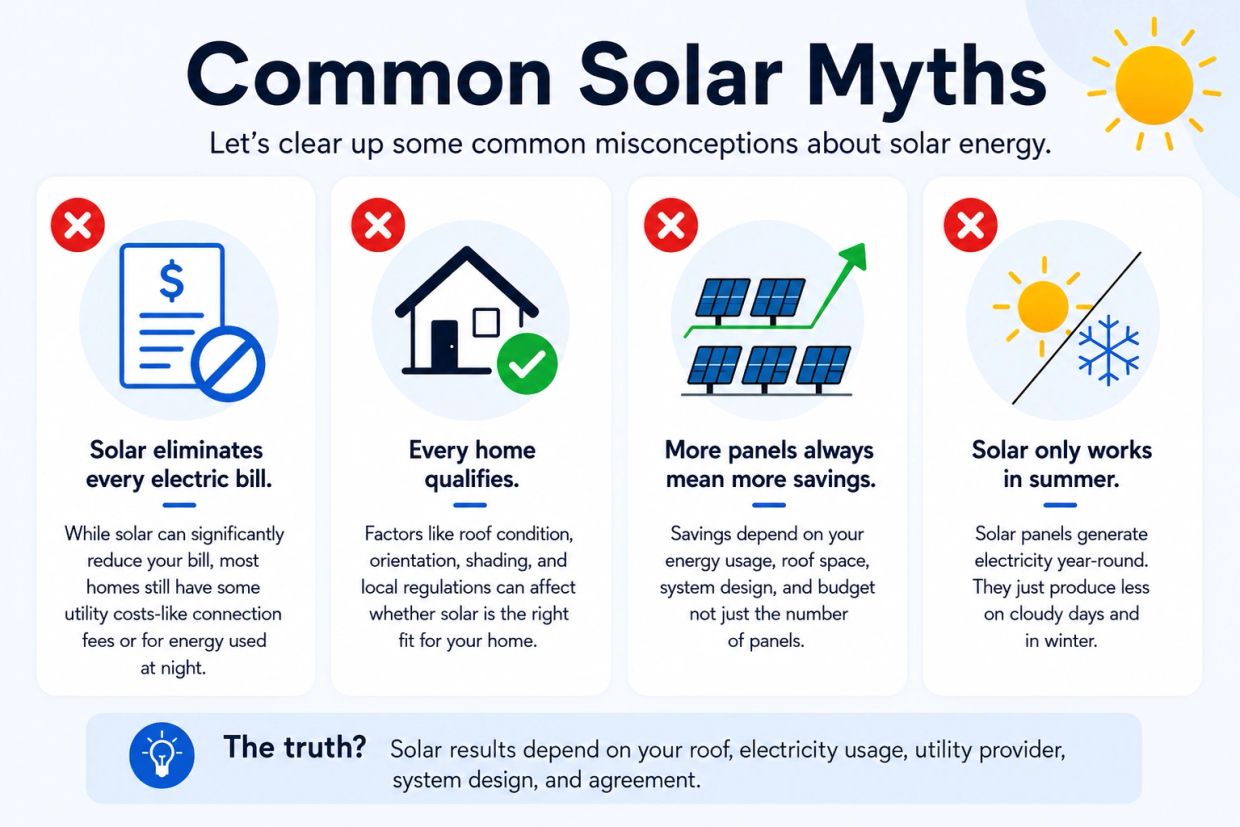
Solar savings are not determined by the number of panels alone. Your roof, energy usage, sunlight, and utility company all affect whether the numbers make sense.
A proper evaluation should happen before you compare payments or sign a contract.
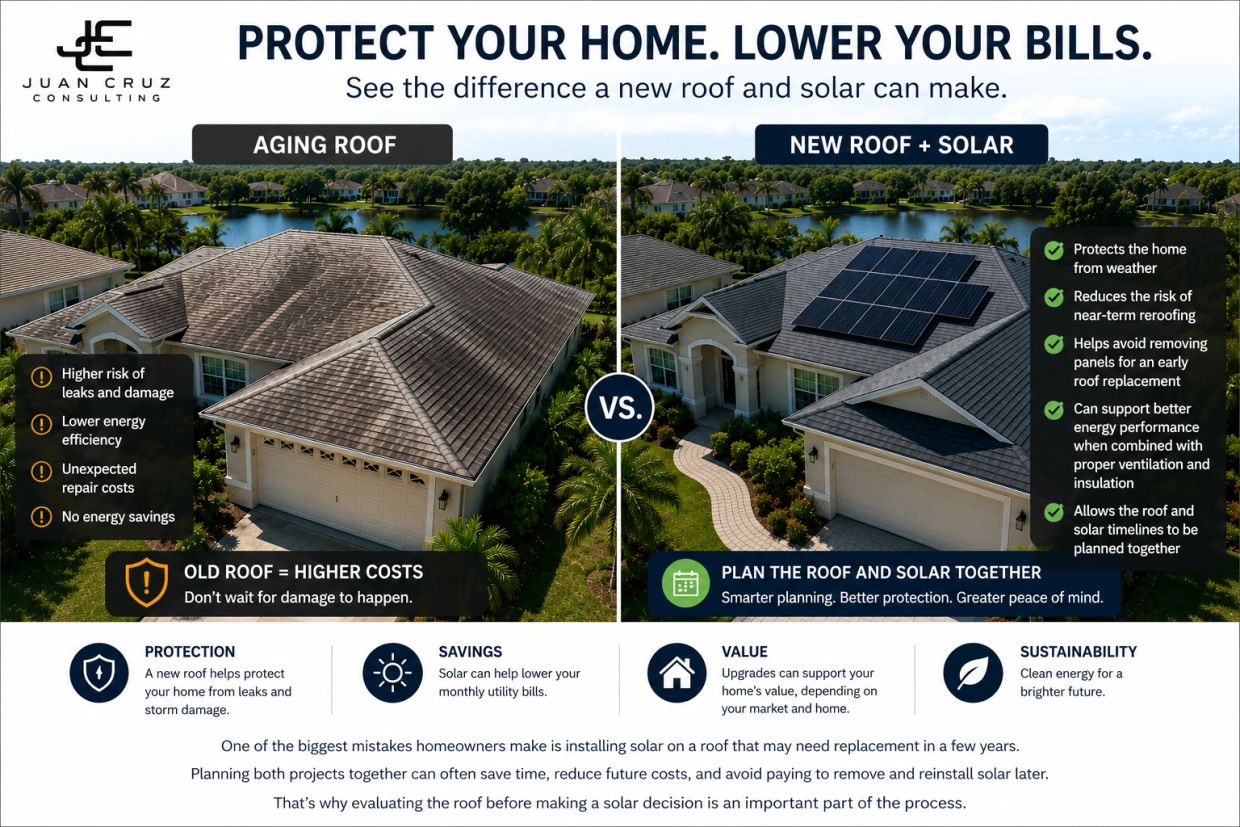
Age, condition, and remaining life should be reviewed before panels are installed.
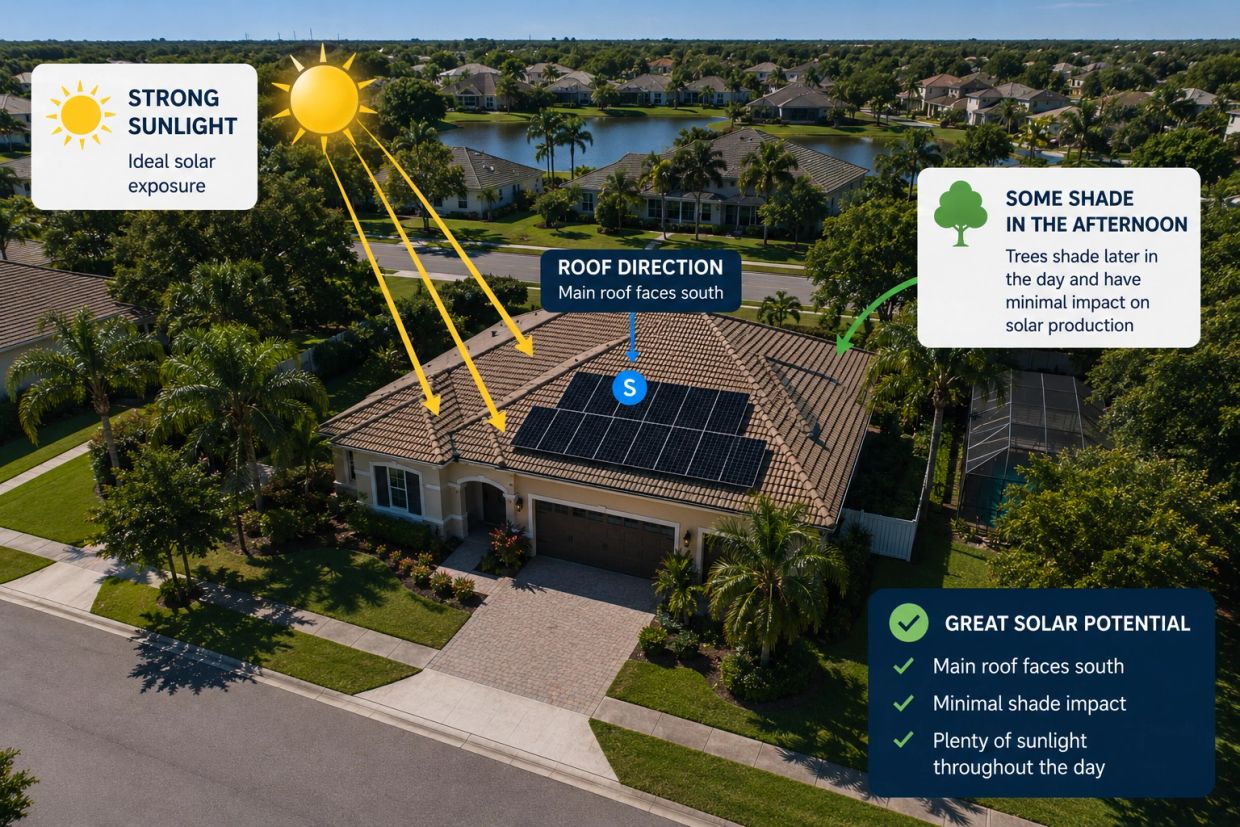
Trees, nearby buildings, and roof features can reduce solar production.
The roof needs enough usable space around vents, chimneys, skylights, and required safety clearances.
A full year of utility usage provides a more accurate picture than one monthly bill.
Programs, connection rules, credits, and fees vary by utility company.
Will solar provide enough value for this specific home?
The real question is not whether panels can fit on your roof. It is whether solar makes financial sense for your home, usage, utility provider, and long-term plans.


You own the system without a solar payment, but this requires the largest upfront investment.
You own the system while making scheduled payments. Financing costs, interest rates, dealer fees, and loan terms should all be reviewed.
A third-party company owns the system. Maintenance and monitoring are generally handled according to the agreement, but homeowners should review payment terms, transfer requirements, and any annual increases.
No option is automatically best for every homeowner. The right structure depends on your budget, ownership goals, roof, utility usage, and how long you expect to remain in the home.
A proper solar review should use at least 12 months of utility history and focus on the amount of electricity used, measured in kilowatt-hours, not only the dollar amount of the bills.
A full year shows seasonal changes and helps reduce the risk of designing a system that is too large or too small. Major future changes, such as adding a pool, electric vehicle, or new HVAC system, should also be considered.
The equipment should be installed by a properly licensed and insured contractor.
Before signing, ask for the installation company’s legal name, license information, and confirmation of who will pull the permits and complete the work. Also ask whether any part of the installation will be subcontracted.
When homeowners move forward through Juan Cruz Consulting, the installation partner responsible for the project is identified before the agreement is finalized.
Solar systems may include separate warranties for the panels, inverter, battery, installation workmanship, roof penetrations, and system production.
Ask who provides each warranty, how long it lasts, what it excludes, and whether labor, shipping, and replacement costs are covered. You should also confirm whether the warranties transfer to a future homeowner.
A long equipment warranty does not automatically mean every repair cost is covered.
Solar panels normally need to be removed before the roof is replaced and reinstalled afterward.
The cost and responsibility for this work depend on your agreement, warranties, and service provider. Ask who is authorized to remove the panels, how much the work may cost, and whether using another contractor could affect your warranties.
Evaluating the roof before installing solar can help avoid an early removal and reinstallation expense.
Service may be handled by the original installer, equipment manufacturer, financing or third-party ownership provider, or a separate service company.
Before signing, ask who monitors the system, who handles warranty claims, and who you contact when the system is not producing properly. Get the service process and contact information in writing.
Do not assume the salesperson will remain your service contact after installation.
Savings projections should be based on your actual electricity usage, roof conditions, shade, system size, expected production, utility billing rules, and the complete cost of the agreement.
The calculation should also disclose assumptions about future utility rates, equipment performance, financing costs, annual payment increases, and remaining utility charges.
Savings are generally estimates unless a specific guarantee and remedy are clearly written into the contract.
There may be.
Solar loans can include interest and lender charges that increase the total amount paid over time. Homeowners should review the interest rate, monthly payment, loan term, and total repayment amount before signing.
Leases and power purchase agreements may include annual payment increases, commonly called escalators. Review how the payment may change each year and the total estimated cost over the full agreement, not only the starting monthly payment.
The answer depends on how the system was purchased.
An owned system may transfer with the home, but any remaining loan balance or lien must be addressed. A leased system or power purchase agreement may require the buyer to assume the agreement, receive provider approval, or complete a buyout.
Solar financing can also affect a refinance. Review the transfer and payoff terms before signing, not when you are already preparing to move.
Most solar proposals show projected production based on software, historical weather, roof conditions, shade, and system design.
A production guarantee only exists when it is clearly included in the written agreement. The contract should explain how production is measured, what conditions are excluded, and what the provider will do if the system produces less than the guaranteed amount.
A salesperson’s verbal promise is not the same as a contractual guarantee.
Keep copies of your contract, permits, equipment model numbers, serial numbers, monitoring information, and warranty documents.
Depending on the issue, you may need to contact the equipment manufacturer, lender, third-party ownership provider, monitoring company, or another licensed solar service contractor.
Manufacturer equipment warranties may remain valid, but an installer’s workmanship warranty can be difficult to enforce if the company closes. This is why the companies backing each part of the project should be identified before signing.
Juan Cruz Consulting helps Florida homeowners evaluate solar as part of the bigger picture of their home.
We review the roof, electricity usage, utility provider, payment options, and other efficiency needs before recommending a path forward.
When solar is a good fit, we coordinate with vetted, licensed installation partners. When the numbers do not make sense, we will tell you that too.
Our role is to help you understand your options clearly so you can make a decision based on your home, budget, and long-term goals.
Copyright © 2026 JCC - All Rights Reserved.
We use cookies to analyze website traffic and optimize your website experience. By accepting our use of cookies, your data will be aggregated with all other user data.